
A slanted tip suits brow shaping, while pointed and flat tips handle different gripping tasks. Choosing the best precision tweezers in South Africa starts with matching the tip to the hairs you want to remove. A controlled grip matters too: too much pressure can make each pluck harder to manage.
If tweezers slip or catch several hairs at once, the tool may not suit the task. Tip shape, stainless steel construction and handling all affect how controlled brow grooming feels.
This guide explains how to choose a tip, what stainless steel offers for everyday use, and how grip and pressure affect precision. You’ll also find practical advice on cleaning tweezers and removing hairs in the direction of growth, so your routine stays simple and deliberate.
Key Takeaways
- Match the tip shape to the hair and area you’re targeting for more controlled grooming.
- Assess stainless steel construction and how easily the tweezers can be cleaned before choosing a tool.
- Use a steady, light grip to improve control and avoid pinching more hair than intended.
- Follow the direction of hair growth when removing hairs, and keep the tips clean between uses.
- For imported tweezers, review delivery, returns and warranty terms; delivery to South Africa can be as quick as 2 business days.
Slanted, pointed, and flat tweezer tips
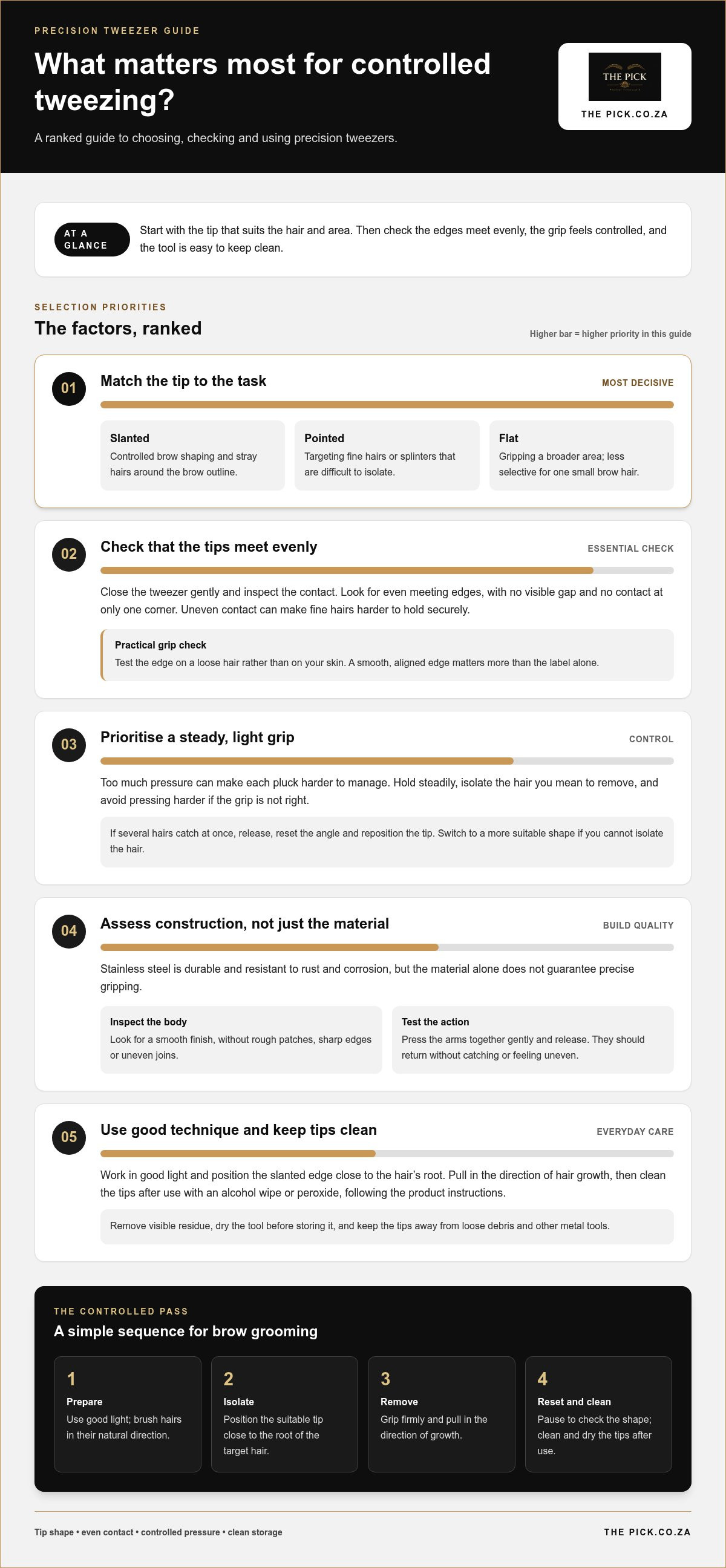
Tip shape determines how tweezers meet a hair. For brow grooming, a slanted tip is suited to shaping because its angled edge can approach hairs along the brow line. Pointed tips target fine hairs or splinters. Flat tips grip a larger area, so they are less suited to isolating a single small brow hair.
Match the tip to the task. Choose a slanted edge to remove stray hairs around a brow’s outline, or a pointed tip when a fine hair is difficult to isolate. A flat edge can grip a broader section, but offers less selective contact for detailed brow shaping.
Tip alignment matters as much as shape. Close the tweezer gently and inspect where the edges meet. They should make even contact, without a visible gap or contact at only one corner. Uneven contact can make a fine hair harder to hold securely, even when the tip shape suits the task.
Hand-filed slanted tips are shaped and finished by hand, but that description alone doesn’t show how precisely a tweezer grips. Check the finished edge: close it, look for consistent contact, then test the grip on a loose hair rather than your skin. A smooth, aligned edge is the practical feature to assess.
- Slanted: Choose this shape for controlled brow shaping and stray hairs.
- Pointed: Use the narrow end to target fine hairs or splinters.
- Flat: Consider it when you need to grip a larger area, not isolate one hair.
For a steadier pass, work in good light and position the slanted edge close to the hair’s root. Grip the hair firmly, then pull in its direction of growth. If the tweezer catches several hairs, reset the angle and isolate one strand before pulling. This simple adjustment helps keep shaping deliberate.
Clean the tips after each use with an alcohol wipe or peroxide, following product instructions. This matters for any tweezer used near the eyes. When comparing precision tweezers in South Africa, assess tip alignment and intended use, not the label alone. A well-matched tip makes the difference between broad gripping and precise brow work.
Before you begin, decide whether the task calls for contact with a single strand or a wider patch. Flat tweezer tips can grip larger areas, so consider a flat edge if broad contact is your aim. If you need to focus on one hair, choose a tip that lets you isolate it. Match the tool to the specific area rather than treating one shape as right for every pass. A deliberate choice can also help you avoid changing your grip midway through the task.
Pause before pulling if the hair isn’t held as intended. Release it, reposition the tweezer, and check that the selected edge meets the target rather than catching nearby hairs. Adjust the angle and placement until the contact feels controlled. If you can’t isolate the hair, switch to a more suitable tip instead of pressing harder. Let the task determine the tool, and keep each pass focused on the hair you mean to remove.
Stainless steel construction
Stainless steel is durable and resistant to rust and corrosion, making it a practical material for grooming tools. That resistance doesn’t mean every pair handles moisture or neglect in the same way. Surface finish, construction and care all affect how a tweezer performs over time. Assess the whole tool, not just the material label.
Start with the body. Hold the tweezer under good light and inspect its surface from tip to handle. Look for a smooth finish without visible rough patches, sharp edges or uneven joins. These checks won’t establish the steel grade, but they can reveal details that affect handling and cleaning. A clean, even surface is easier to wipe than one with visible residue or rough seams.
Next, test the action. Press the arms together gently, then release them. They should return without catching or feeling uneven. This is a practical construction check, not a test of corrosion resistance. If the arms twist as you close them, the material alone won’t make the tool feel precise. A solid-feeling body and consistent movement work together.
Stainless steel also supports straightforward maintenance. After grooming, remove visible residue from the tips, clean them according to the product instructions, and dry the tool before storing it. Don’t leave tweezers damp on a bathroom surface. A closed drawer or clean case helps keep the tips away from loose debris and other metal tools.
- Inspect: Look over the body and joins for rough areas or visible defects.
- Test: Close and release the arms to assess their movement.
- Maintain: Clean the tips as directed, dry the tool, then store it clean.
Keep material claims in perspective. Stainless steel’s resistance to rust and corrosion is useful, but it doesn’t prove the tips meet evenly or grip fine hairs well. Those are separate performance checks. For brow grooming, inspect tip contact and test the closing action alongside the body finish. A polished exterior can’t compensate for tips that fail to meet properly.
When comparing precision tweezers in South Africa, treat stainless steel as one selection factor, not the only one. Check the build, finish and movement of the arms. Then consider whether the tool’s shape and grip suit your routine. This practical sequence separates a useful material feature from the precision details that determine everyday control.
Brow grooming tools
Good brow grooming depends on more than the tweezer. A clear mirror, steady lighting and a clean tool help you see which hairs you’re targeting. Since tweezers are used on skin near the eyes, choose one that’s easy to clean. Keep it separate from shared grooming tools, and don’t leave its tips on a bathroom counter between uses.
Prepare the brow before tweezing. Use a clean brow brush to move hairs in their natural direction, then assess the outline in even light. This makes stray hairs easier to distinguish from those that contribute to the brow’s shape. Work gradually: remove one hair, pause, and check both brows before continuing. That small reset helps prevent an impulsive change to the overall outline.
Timing can affect how easily you grip a hair. Brow specialist Sania Vucetaj recommends allowing eyebrows to grow to about a quarter of an inch before tweezing, to help avoid ingrown hairs. Rather than chasing very short regrowth, let the hair become visible enough to grasp. Use a mirror to identify the strand, then position the tweezer close to the skin without pinching it.
Pull in the hair’s direction of growth. If a stray hair angles towards the temple, for example, draw it gently along that path rather than straight upwards. Keep the surrounding skin relaxed and don’t tug repeatedly at a hair that won’t release. Reposition the tips and grip the strand closer to its base. Stop if you can’t isolate the hair clearly.
- Before grooming: Brush the brow into place and inspect its outline in good light.
- During grooming: Isolate one visible stray hair and pull along its growth direction.
- After grooming: Clean the tweezer tips and store the tool away from loose debris.
Keep the routine selective. A brow brush helps reveal the hairs’ natural direction, while a precision tweezer removes individual strays. Neither tool needs to change the brow’s whole shape. Check your progress in the mirror from a comfortable distance; close-up inspection alone can make small gaps seem more prominent. Step back, compare the overall outline, then decide whether another hair needs removing.
For a grooming tool used near the eyes, cleanability is a practical selection factor, not an afterthought. Choose a design that lets you reach and wipe the tips easily. Pair it with a deliberate routine: brush, inspect, isolate, remove, then clean. These steps make brow grooming more controlled without turning a simple task into repeated plucking.
Grip and pressure
Grip affects how steadily the tweezer meets a hair. Hold it between your thumb and index finger, with your middle finger supporting the lower arm. Keep your wrist relaxed. A tense hand can make the tips shift, especially when targeting a short hair near the brow line. Resting your forearm on a stable surface can help limit unwanted movement.
Use only enough pressure to keep the hair between the tips. Squeezing harder won’t improve control if the edges already hold the strand. It can tire your fingers sooner or make the tips press against your skin. Practise closing the tweezer gently on a loose hair, then release it. Notice how little force is needed to maintain contact.
Position your hand before plucking. Bring the tweezer close to the hair, pause, and check that the tips have caught one strand rather than nearby hairs. If the tool slips, don’t clamp down immediately. Open the arms, adjust your angle, and grip closer to the hair’s base. That reset can restore control without pulling at the skin.
A steady pull also depends on how you guide the tool. Keep your fingers in contact with the arms as you draw the hair in its direction of growth. If a hair angles towards the temple, for example, follow that path rather than jerking upwards. Use a smooth movement. If the hair resists, release it and reposition instead of increasing pressure.
- Too little grip: The hair slips between the tips during the pull.
- Too much pressure: The tips press into skin or your fingers tense.
- Controlled grip: One hair stays held whilst your hand moves steadily.
Test how the tweezer feels before grooming. Close its arms slowly, then release them and notice whether you can maintain an even hold. A tool that feels stiff may take more effort to close; one that feels loose may need careful positioning. Either way, adjust your grip before working near the brow, not midway through a pull.
For better control, work in good light and choose a stable position. Keep your elbow supported, hold the tweezer close enough to guide its tips, and avoid gripping the arms at their very end. If your fingers start to tire, pause. Resume only when you can isolate the target hair clearly. Consistent pressure, a secure hold and a measured pull make each removal more deliberate.
What should South African buyers know about shipping, returns, and warranties for imported tweezers?
For South African buyers, delivery speed is only one part of an imported tweezer purchase. Delivery to South Africa can be as quick as 2 business days, but the arrival estimate alone doesn’t explain the returns process or warranty coverage. Compare those terms before ordering, alongside the tool’s tip design and intended use.
Read the delivery information for your order. Note the stated delivery window, the destination covered and any conditions that affect dispatch or arrival. An estimate may distinguish processing time from the carrier’s journey. Keep your order confirmation and tracking details together, so you can compare the expected timeline with the updates you receive.
Review the return terms separately. Look for the return window, the condition required for an item to be accepted, and the steps for starting a return. A tweezer is a personal grooming tool, so packaging and signs of use may affect how a return is handled. Check the terms before opening or using the item if you may need to return it.
Read the warranty terms closely. Identify what the warranty covers, how long it applies, and what evidence is needed for a claim. Distinguish defects in materials or workmanship from everyday wear or accidental damage if the terms make that distinction. Keep proof of purchase and any product information supplied with the tweezer. Clear records make it easier to follow the stated claims process.
- Delivery: Compare the stated estimate with the destination and dispatch conditions.
- Returns: Review the return window, item condition and return steps before use.
- Warranty: Read the coverage, exclusions and claim requirements, then retain purchase records.
For an imported tweezer, these details help set practical expectations. A fast delivery estimate doesn’t explain return eligibility, and a warranty doesn’t necessarily cover every kind of damage. Consider each as a separate part of the purchase decision. If the delivery estimate changes, keep the original confirmation and later updates together for reference.
Use a simple sequence before placing an order: read the delivery terms, review returns, then assess warranty coverage. Compare those points with the tool’s intended grooming task. Review your purchase options as part of that final comparison.
Also consider whether the tweezer will be practical to maintain after it arrives. Tweezers should be easy to clean because they are used on skin and near the eyes. Before buying, look for clear product information about cleaning and materials, and consider whether the design has areas that would be difficult for you to clean. Assess this alongside delivery, return eligibility and warranty coverage, rather than treating any of those terms as a substitute for a tool that suits your routine.
If the available information does not explain how to clean the tweezer, seek clarification before ordering or compare it with options that provide clearer guidance. Once it arrives, check that the item matches the product description and that its design seems manageable to clean. Keep any care instructions with your purchase records, so you can refer to them while using the tool and when reviewing the seller’s stated terms. This final check connects the practical care of the tweezer with the purchase protections you have already reviewed.
THE PICK.CO.ZA: THE PICK™ Zero Miss Tweezer
THE PICK.CO.ZA offers THE PICK™ Zero Miss Tweezer for people seeking a dedicated tool for precision hair removal. Consider it when your grooming routine calls for a tweezer rather than a brow-shaping service. The choice still comes down to the details covered in this guide: whether the tip suits your task, the grip feels manageable, and the tool is easy to clean. Use those points to assess whether it fits your routine. THE PICK.CO.ZA also offers hair remover products for at-home grooming. Keep your needs simple and specific: choose a tweezer for targeted removal, and compare its handling with the way you groom. Visit THE PICK.CO.ZA to explore THE PICK™ Zero Miss Tweezer and its hair remover products.
Make your next grooming choice deliberate
Turn your search into a practical decision, not an impulse buy. Before choosing among the best precision tweezers in South Africa, decide what matters most in your routine: targeted hair removal, comfortable handling or straightforward care. That priority gives you a clear standard for comparing options and helps you avoid features that don’t serve your needs.
Make grooming feel intentional. Set aside a moment, use a clear mirror, and keep your chosen tool in a clean, easy-to-reach place. A consistent routine is easier to maintain when the tool suits the task and fits naturally into your space. Choose with care, then let simplicity do the work.
If you’d like help with your next step, contact THE PICK.CO.ZA for help. Move forward with a considered choice and a routine that feels more manageable.
Frequently Asked Questions
What are the best precision tweezers available in South Africa?
The best precision tweezers in South Africa are those that suit your grooming task and feel controlled in your hand. For brow work, assess whether the tip lets you isolate individual hairs, whether the arms close comfortably, and whether the tool is easy to clean. A slanted tip often suits shaping; a pointed tip can target fine hairs. Choose based on practical fit, not the label alone.
How can you check tweezer tip alignment and gripping precision before buying?
Under good light, slowly close the tweezer and inspect the tips from the front and side. They should meet evenly, without a visible gap or one edge crossing the other. If you can test the tool, grip a loose hair and check whether it stays held with light pressure. Don’t test it on skin. This quick inspection helps show whether the tips make consistent contact.